
Bakery Supermart Simulator
Big Glock StudioStrategy
4.1189.00 Reviews
- Version
- 0.1.33
- Installs
- 10.00M
- Age Rating
- Everyone
Screenshots
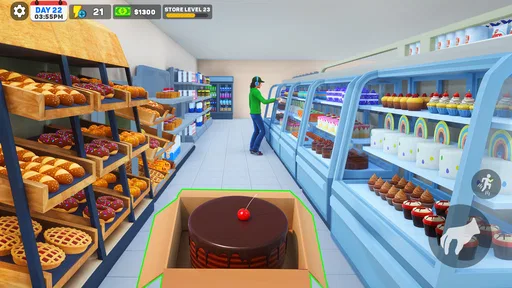
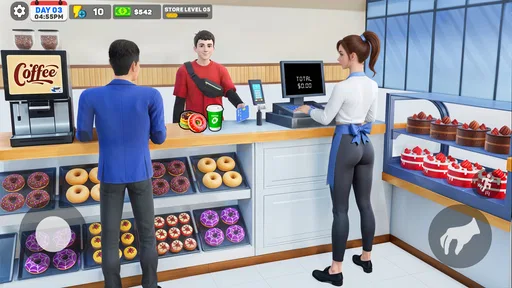
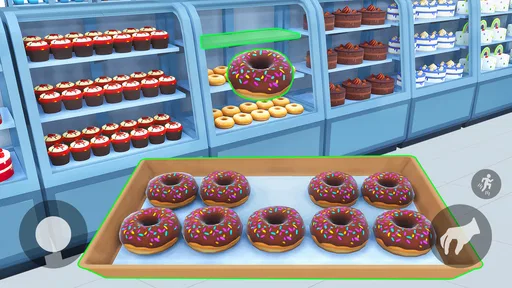
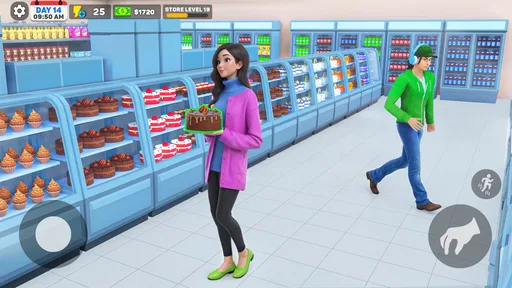
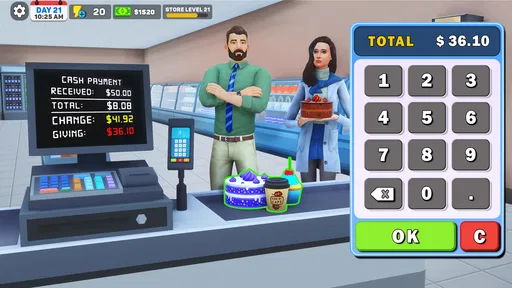
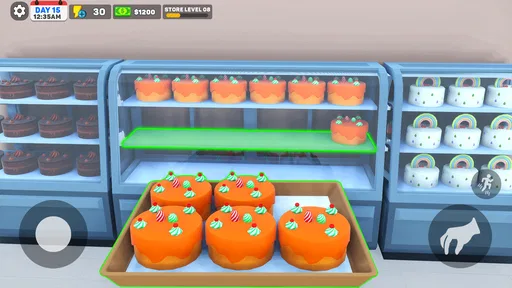
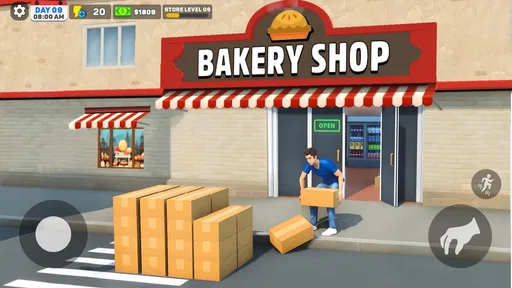
Our Review of Bakery Supermart Simulator
 Analysis by Appyee
I approached Bakery Supermart Simulator expecting a light supermarket game, but its appeal is more practical than flashy. Developed by Big Glock Studio, this free strategy game puts the focus on the everyday rhythm of running a bakery-style supermarket: serving customers, handling the cash register, and keeping the store moving. It is an easy concept to understand, yet the small decisions made during a session determine whether the shop feels smooth or chaotic.
That simplicity is important. This is not the kind of game I would choose for a deep economic simulation or a long story campaign. I would choose it when I want a straightforward management experience that I can understand quickly and play in short bursts. The store listing describes it as a supermarket grocery and cash register game, and that description is a fair starting point, although the hands-on experience is more about building a repeatable routine than merely tapping through checkout tasks.
The game is free to download, rated for Everyone, and currently sits at a 4.1 average from around 27 thousand ratings. It has passed 10 million installs, which suggests that its simple supermarket theme has found a broad audience. I can see why: the premise is immediately familiar, the controls are approachable, and the bakery setting gives the usual shop-management formula a warmer identity than a generic retail counter.
How the everyday store routine works
I find the everyday store routine easiest to enjoy when I focus on one customer-facing task at a time, rather than trying to plan and tap ahead simultaneously. That gives me a chance to learn the screen’s visual order at my own pace and notice where attention slips. Next, it is worth considering how the repeated touch interactions and sensory demands may feel in different play situations.
A clear starting loop for new players
My first useful discovery was that the game works best when I treat each session as a small work shift rather than a race to unlock everything. I begin by paying attention to what the shop is asking me to do, then I complete the most immediate customer-facing task before worrying about longer-term progress. That approach keeps the screen manageable and prevents me from spending attention on upgrades or actions that do not help the current flow.
The bakery-supermarket theme gives the routine a pleasant sense of place. Grocery shopping and checkout are familiar activities, so I do not need a tutorial full of complicated terminology to understand the objective. When a customer needs service, I can usually recognize the intended action quickly. That makes the game suitable for younger players and for anyone who wants a strategy title without a steep learning curve.
My preferred baseline workflow is simple: observe the shop, handle the active customer need, complete the register interaction carefully, and only then look at the next improvement. This order matters because rushing toward expansion-style decisions while the immediate store routine is unfinished makes the session feel less efficient. In a game built around repeated tasks, consistency is more valuable than frantic tapping.
Why short sessions suit it well
I found the game particularly comfortable in ordinary situations where I have a few spare minutes. For example, if I am waiting for an appointment, I can open it, complete a compact round of store activity, and stop without needing to remember a complicated plot or a large map. The familiar checkout theme also makes it easy to return after a break because the basic objective remains obvious.
That same accessibility creates a limitation. Players who need a strong narrative, competitive multiplayer, or a wide strategic sandbox may find the routine too narrow. The game gives me a focused retail task, not a broad world to explore. Its strength is that it removes unnecessary complexity; its weakness is that players who enjoy constant novelty may eventually want more variety than the core store loop provides.
I would also avoid judging it by the standards of a full business simulator. It feels closer to a casual strategy game with supermarket responsibilities than to a detailed accounting exercise. I am not managing a real inventory spreadsheet or planning a large chain with complicated market behavior. Instead, I am learning the timing of the shop and making practical choices within the activities the game presents.
What I would do before spending anything
Because the game is free but offers in-app purchases ranging from $0.99 to $31.99 per item, I recommend playing the basic loop first. I would not make a purchase simply because a progress moment feels slow. The better test is whether the normal routine is enjoyable without assistance and whether a paid item would genuinely improve the way I want to play.
This is also where the Everyone rating matters for families. The theme is easy to understand and not dependent on mature content, but parents should still remember that optional purchases can appear in a free game. I would set expectations before handing the device to a child, especially if the child is likely to tap quickly through store screens.
Settings that deserve a quick check
I always inspect the available settings before settling into a new mobile game, and I would do the same here. The useful principle is not to search for secret controls that are not part of the game, but to make the existing experience comfortable. Check sound levels, notification behavior, and any display or control options that are available on your device or in the game itself. A supermarket game can become tiring if repeated effects are too loud or if interruptions break the checkout rhythm.
I also recommend checking the device’s purchase protections before playing for a long time. This is not a gameplay trick, but it is a sensible habit for a free title with optional items. If I am reviewing the game for a family tablet, I would make sure accidental purchases require confirmation. That lets the player enjoy the bakery and register activities without turning a quick tap into an unwanted transaction.
The current version is 0.1.33, so I would keep the game updated through the normal platform process. Updates can affect balance, presentation, or stability, and using the current release is the fairest way to judge the experience. I would also avoid running too many demanding apps at once on an older device, since smooth touch response matters more than high-end graphics for this particular style of play.
Small habits that make the register feel easier
My most useful habit is to slow down for the actual transaction and speed up only during the moments that do not require careful attention. That sounds obvious, but it prevents the common mistake of treating every tap as equally urgent. I watch the customer interaction, complete the required register action, and then use the quiet moment to prepare mentally for the next task.
Another helpful approach is to keep a consistent hand position. On a phone, I use one thumb for the main actions and avoid constantly shifting the device. On a tablet, I place it on a stable surface and use both hands only when the layout makes that comfortable. This is not an in-game shortcut, but it reduces mis-taps and makes repeated cashier work less tiring.
I also recommend learning the visual order of the screen instead of tapping randomly. After a few rounds, I start recognizing where the important customer and register elements appear. That familiarity is more valuable than trying to rush immediately. The game rewards attention to its interface, and the fastest players are likely to be the ones who develop a reliable scan pattern rather than simply tapping faster.
Repeatable patterns for experienced players
Once the basic routine feels natural, I divide each session into three mental phases. First, I identify the active demand. Second, I complete the customer-facing action without switching focus unnecessarily. Third, I use the resulting pause to check progress or prepare for the next interaction. This pattern keeps me from opening menus at the exact moment when the register needs attention.
A second pattern is to avoid making several decisions at once. If I have a choice involving progress, I finish the current service action before evaluating it. This creates a cleaner rhythm and makes it easier to notice whether a decision actually improves the store. In casual management games, players often lose time not because the tasks are difficult, but because they interrupt one task with another.
I would describe this as a habit-based strategy game. The advantage of habits is that they make the experience calmer and more predictable. The trade-off is that the game may feel less exciting once the routine becomes familiar. Players who enjoy optimizing a process will appreciate that feeling of control; players who want constant surprises may see it as repetition.
Where the strategy becomes more personal
Different players can enjoy the same loop in different ways. I prefer treating the store like a tidy workplace and aiming for clean, uninterrupted service. Someone else may care more about unlocking progress quickly or experimenting with the available improvements. Since the game is not forcing me into a single dramatic playstyle, I can decide whether the satisfaction comes from efficiency, completion, or simply the relaxing bakery atmosphere.
For a child, the game can encourage basic sequencing: notice what is needed, complete the action, and move to the next customer. For an adult, it works better as a low-pressure break than as a serious simulation. I would recommend it to families who want an approachable store game, casual players who like routine-based progression, and anyone curious about a supermarket theme without wanting a complicated management interface.
I would skip it if my priority is a detailed economy, realistic supply planning, or a deep staff-management system. In those cases, a more specialized business simulator would be a better fit. I would also skip it if I dislike repeated cashier interactions, because the bakery setting does not completely change the fundamental structure: the pleasure comes from improving a familiar routine, not from discovering a radically different activity every few minutes.
Limits that become clearer with longer play
The biggest limitation is the narrowness of the central loop. The first sessions benefit from clarity, but that clarity can become predictability. Once I understand how to approach the store, the challenge depends heavily on whether I enjoy repeating and refining the same type of work. The game is more satisfying when I view repetition as optimization rather than expecting every session to introduce a new system.
Another consideration is the early version number. A release at 0.1.33 gives the experience a developing feel, so I would approach it as a game that may continue to change rather than as a finished, all-encompassing supermarket simulator. That is not automatically negative, but it affects expectations. I would be patient with balance changes and judge the current routine on its own merits.
The free-to-play structure can also influence how I perceive progress. Even when I do not buy anything, the existence of optional items can make me more conscious of pacing. My advice is to decide in advance whether I am playing for relaxation or acceleration. If I want a calm session, I ignore the temptation to solve every delay with a purchase. If I want to support the developer, I make that choice deliberately rather than impulsively.
How it compares with other supermarket games
Compared with more elaborate supermarket management games, this one is easier to pick up and less intimidating. I do not need to spend a long opening session learning a complex economy before I can enjoy the shop. That makes it a stronger choice for casual play and for younger users. The cost of that accessibility is depth: players looking for detailed pricing, logistics, or long-term business planning may find another strategy title more rewarding.
Compared with pure cashier games, the supermarket framing gives the experience a little more direction. I am not only repeating a register action in isolation; I am participating in the broader feeling of keeping a bakery-oriented store running. Still, anyone seeking a highly varied collection of mini-games should check their expectations. The appeal here is the steady connection between shopping, service, and progress, not an endless list of unrelated challenges.
Compared with idle management games, it feels more hands-on. I pay attention to what is happening and participate in the store routine instead of simply waiting for background earnings. That makes it a better choice when I want interaction, but not when I want a game that can be left alone for long periods. The right alternative depends on whether I want to perform the work or merely supervise its results.
Who will get the most from it
I think the best audience is someone who likes visible progress built from small actions. The game provides a clear reason to keep improving: a smoother store, more confident service, and a better understanding of the routine. It is also a good introduction to strategy games for players who may be put off by military themes, complicated maps, or abstract resource systems.
It works especially well for a short daily habit. I can use one session to practice a particular part of the workflow, such as staying focused during checkout, and then stop before the repetition becomes tiring. This makes the experience easier to fit around school, commuting, or a work break than a strategy game that demands a long uninterrupted campaign.
On the other hand, I would not recommend it as the only game for someone who needs substantial long-term variety. The 4.1 average indicates a generally positive reception, but a rating cannot tell me whether the specific loop matches my taste. If I already know that I lose interest in routine simulators quickly, the large install figure should not change my decision. Popularity is useful context, not a substitute for genre preference.
My approach to mastering the store
For mastery, I focus on reducing wasted attention rather than forcing speed. I keep the device stable, use a familiar scan order, finish one customer interaction before opening another decision, and treat every purchase prompt as optional rather than urgent. These habits make the game feel more controlled and help me separate genuine strategy from simple impatience.
I also change my goal from session to session. One round might be about completing the routine cleanly. Another might be about testing whether a progress choice makes the next shift feel easier. This gives the repetition a purpose and helps me notice which improvements affect my enjoyment rather than chasing every available option automatically.
The most important trade-off is between comfort and ambition. A relaxed player can enjoy the bakery atmosphere and the satisfaction of a functioning register. An optimizing player can study the order of actions and remove small delays. Neither approach is wrong, but the game is strongest when I accept its scale instead of demanding the complexity of a full retail-management simulation.
Final verdict for Android players
Bakery Supermart Simulator is a friendly, accessible strategy game built around supermarket service and cash-register work. Big Glock Studio keeps the premise understandable, and the free entry point makes it easy to test whether the routine suits me. The Everyone rating, broad install base, and approachable controls make it a reasonable recommendation for casual players and families who want a simple store-themed experience.
My recommendation comes with a clear condition: enjoy repeated tasks and gradual improvement. If that sounds satisfying, the game offers a comfortable way to practice timing, attention, and small management decisions. If I want deep economics, a rich story, or constant novelty, I would choose a different strategy game instead.
For me, the best way to play is to build a calm routine, check the available settings, protect purchases with device controls, and avoid treating every delay as a problem that needs money. With those expectations, the game becomes more enjoyable and easier to judge fairly. It is not a complete supermarket empire simulator, but as a focused bakery-store and checkout game, it has a clear identity and a useful place in a casual Android library.
Verdict
Strengths of Bakery Supermart Simulator
- Relaxing supermarket management gameplay with a bakery-focused theme.
- Simple controls make it accessible for casual players.
- Gradual progression keeps new tasks and upgrades coming.
- Satisfying baking and stocking activities create a rewarding routine.
- Suitable for short play sessions when you want a low-pressure game.
Limitations of Bakery Supermart Simulator
- Gameplay may become repetitive after mastering the main store routines.
- Some upgrades or progress can require considerable time and patience.
- The simulator offers limited depth compared with more complex management games.
- Ads or optional purchases may interrupt the experience, depending on the version.
- Performance can vary on older devices, especially in busy store areas.
Similar Picks in This Category
View All
Clash of Clans
Supercell4.5

Plants vs. Zombies™
ELECTRONIC ARTS3.7

Lords Mobile: Kingdom Wars
IGG.COM4.5

Clash Royale
Supercell4.4

State.io — Conquer the World
CASUAL AZUR GAMES4.1

Car Driving School : Car Games
Spark Game Studios3.9
Frequently Asked Questions
What is Bakery Supermart Simulator about?
Bakery Supermart Simulator is a management and simulation game in which you run your own bakery and supermarket business. You typically prepare or sell baked goods, organize shelves, serve customers, manage stock, and improve the store over time. The main appeal is its combination of simple shopkeeping tasks, gradual expansion, and casual progression rather than a complex story or competitive multiplayer experience.
Is Bakery Supermart Simulator free to download and play?
The game is generally available as a free download, but availability, pricing, and included features may vary depending on whether you use Android or iOS. Free versions can include advertisements, optional in-app purchases, or items that speed up progress. Before installing, check the store listing for the current purchase details, supported devices, and whether any paid content is required to access specific upgrades or gameplay features.
Does Bakery Supermart Simulator require an internet connection?
Basic gameplay may work offline, which is useful if you want to manage your bakery while traveling or without mobile data. However, some functions can depend on an internet connection, including advertisements, cloud synchronization, updates, special events, or purchases. After installation, it is worth testing the game in airplane mode because offline access and available features can change after updates or differ between device versions.
Is Bakery Supermart Simulator suitable for children and casual players?
The game is designed around approachable business and shop-management mechanics, so casual players can usually understand the controls quickly. It may also be suitable for older children, but parents should review the age rating, advertising, and in-app purchase settings before allowing independent play. The game can involve repeated tasks and waiting or upgrade systems, which may not appeal to players seeking fast action or a deep simulation.
What should I check before downloading Bakery Supermart Simulator?
Before downloading, check that your Android or iOS device meets the required operating-system version and has enough free storage for the installation and future updates. Also review the latest user feedback, permissions, privacy information, advertisements, and in-app purchase policies. If you prefer uninterrupted play, confirm whether the game contains forced ads or online features, and download it only from the official Google Play Store or Apple App Store.
Play our best games!


